Published on October 20, 2026
How to choose a perfume for the season and the occasion
Which families work best in hot and cold weather, at the office or for a dinner, and how much perfume to apply each time.
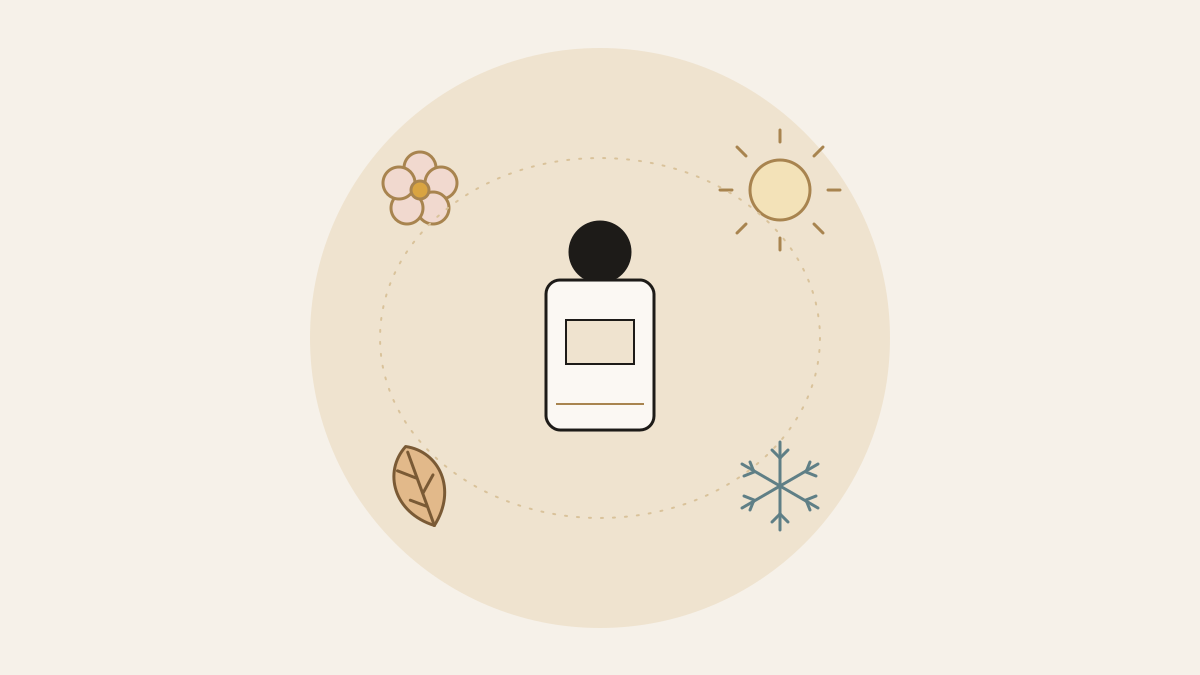
The same perfume can feel perfect on a winter day and overwhelming in the middle of August. Temperature and humidity change how a fragrance evaporates, and the setting changes how noticeable it should be. These guidelines will help you get it right.
In hot weather: light and fresh
Heat intensifies perfumes and makes them project more, so choose light fragrances and apply less. The citrus, aquatic and aromatic families work very well, as do fresh florals. Very sweet or dense perfumes can feel heavy.
In cold weather: warm and enveloping
In winter perfumes evaporate more slowly and are perceived less, so it is time for fragrances with more body: oriental, woody, gourmand and spicy. Vanilla, amber or coffee shine especially.
Spring and autumn
These are transition seasons: florals and fruity scents in spring; soft woods, spices and nutty notes in autumn. Divain lists a recommended season for many of its perfumes, which you will find on each perfume page.
By occasion
- Office or closed spaces: be discreet. Clean musks, soft florals or citrus. One or two sprays are enough.
- Everyday: whatever makes you comfortable; versatile fragrances such as soft woods are a safe bet.
- Evenings or events: time for intense, oriental or gourmand perfumes with more trail.
- Sport or extreme heat: citrus and aquatic scents, or simply less perfume.
How much to apply
As a guide, two to four sprays for a medium-intensity perfume. If it is very intense, start with fewer. Remember that your nose gets used to your own perfume within minutes: not smelling it does not mean others cannot.
In the catalogue you can filter by fragrance family to explore the options for each season.


