Published on October 20, 2026
Eau de parfum, eau de toilette and extrait: what is the difference?
What each concentration means, how long it usually lasts and which one to choose for the way you will wear it.
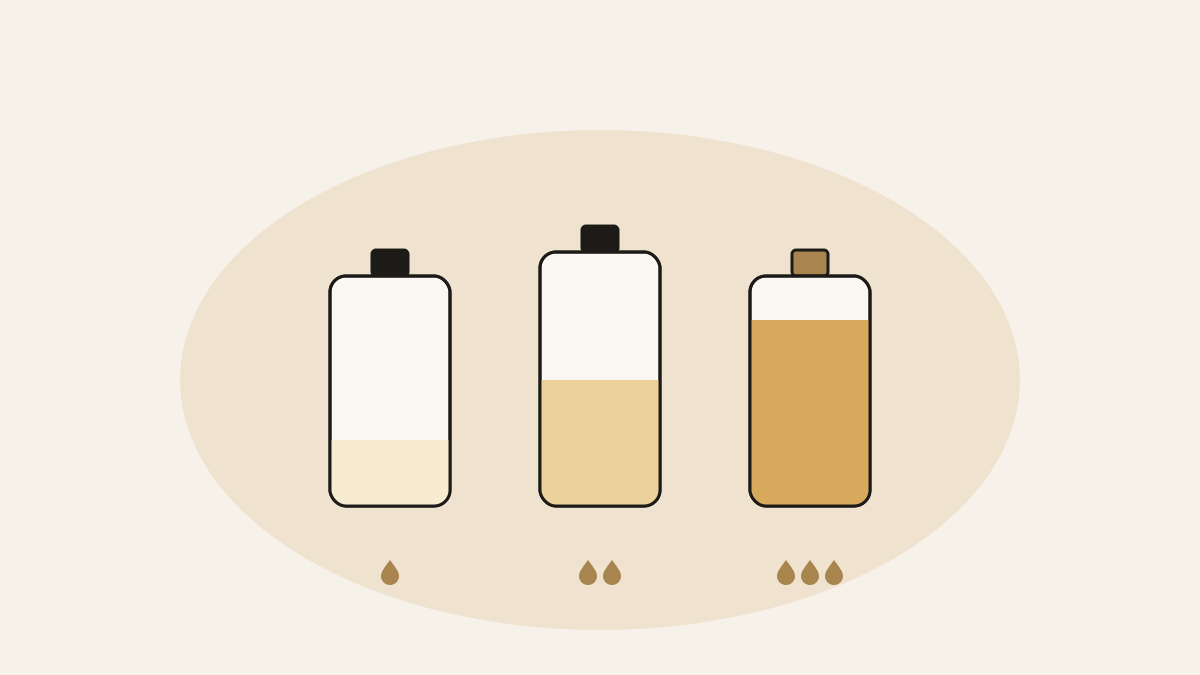
The labels “eau de parfum” and “eau de toilette” are not about the smell but about concentration: how much of the formula is aromatic oils and how much is alcohol and water. There is no official standard and each brand sets its own percentages, but the usual ranges are:
- Extrait de parfum or parfum: the most concentrated, roughly 20% to 30%. Intense, close to the skin and long-lasting.
- Eau de parfum (EDP): around 15–20%. The most popular balance between intensity and longevity.
- Eau de toilette (EDT): around 5–15%. Lighter and fresher, ideal for daytime or hot weather.
- Eau de cologne: around 2–5%. Very light and short-lived.
More concentration is not always better
A higher concentration usually lasts longer, but it does not necessarily project more: some extraits stay very close to the skin, while certain fresh eaux de toilette are very noticeable around you. The same fragrance can also change character between versions: the “elixir” or “intense” of a perfume is not just “more of the same”, it often changes notes.
Which one to choose
- For everyday wear and hot weather, an eau de toilette or a light eau de parfum.
- For winter, evenings or all-day wear, an eau de parfum or an extrait.
- If your skin is dry and holds perfume less well, a higher concentration can make up for it.
When comparing a perfume with its original, also bear in mind the concentration of each, as it affects intensity and longevity. Each page in the catalogue shows the notes and the intensity Divain lists.


