Published on November 11, 2026 · By David Pacheco
How to store perfume: light, heat and shelf life
Where to keep your perfumes, what damages them, how to tell if one has gone off and how long they usually last once opened. A practical storage guide.
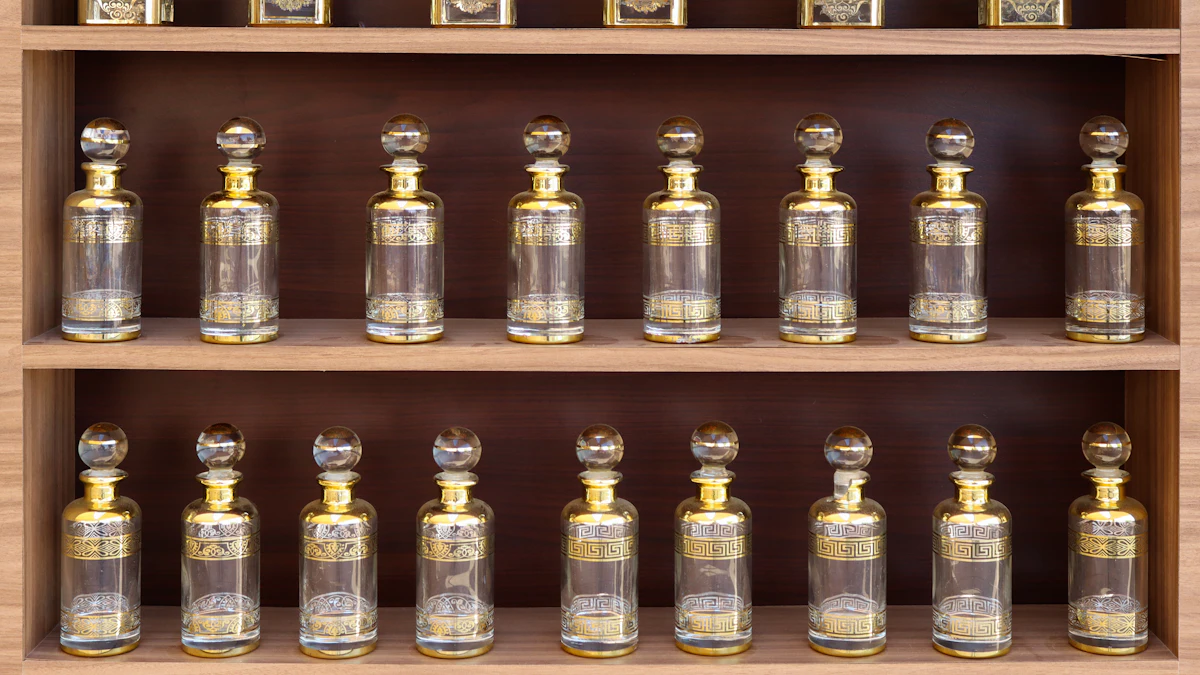
Perfume does not last forever. It is a blend of aromatic oils, alcohol and sometimes water, and over time its ingredients react with their surroundings. The good news is that most of what shortens its life depends on how you store it. With a few habits, you can keep your bottle smelling the same on the last day as on the first.
Perfume’s four enemies
- Light. Sunlight, and to a lesser extent strong artificial light, gradually breaks down aromatic molecules. A clear bottle next to a window is one of the worst possible scenarios, however pretty it looks.
- Heat. High temperatures speed up chemical reactions and evaporation. Avoid leaving perfume near radiators, on top of appliances or in the car in summer.
- Oxygen. Every time the perfume comes into contact with air, it oxidises a little. That is why an almost empty bottle, with lots of air inside, tends to change sooner than a full one.
- Humidity and sudden changes. It is not so much humidity itself as the swings in temperature and steam that harm the formula and the parts of the bottle.
Why the bathroom is a bad place
It is where almost everyone keeps their perfume, because it is where they get ready. But the bathroom brings together exactly what you want to avoid: hot showers that raise the temperature and humidity several times a day, followed by rapid cooling. That constant up and down punishes the formula far more than a stable temperature.
The ideal place is cool, dark and stable: a chest of drawers, a bedroom wardrobe or the perfume’s own box on a shelf. There is no need to keep it in the fridge; in fact, taking it in and out often causes exactly the temperature changes we want to avoid.
Signs a perfume has gone off
A perfume that has turned is not usually dangerous to smell, but it is disappointing. These are the most common clues:
- The colour has changed noticeably: it has darkened or turned cloudy. Note that some perfumes darken slightly over time without losing quality, especially those containing vanilla or certain resins, so colour alone is not conclusive.
- The opening smells sour, vinegary or metallic. Top notes are the most delicate and usually the first to spoil. If you notice a sharp or rancid hit when you spray that was not there before, it is a bad sign.
- It smells much more of alcohol than before and hardly anything of the original character remains.
- The base is still fine, but the opening has gone. This is common: woods and amber hold up better than citrus.
How long perfume lasts
There is no single figure. It depends on the formula, the bottle and, above all, the storage conditions. As a general guide, a well-stored perfume usually stays in good condition for several years, and many last considerably longer. If the packaging carries the open-jar symbol with a number and an “M” (for example, 36 M), it shows the recommended months of use after opening.
What is fairly consistent is which kind of perfume ages first. Citrus and fresh scents, with lots of bergamot, lemon or green notes, are the most fragile. Perfumes with dense bases, such as orientals or woody scents rich in resins, amber or woods, usually stand the test of time better. If you have a perfume from the citrus family, it is worth wearing it freely rather than saving it “for special occasions”.
When travelling
- Use a travel atomiser or a decant instead of taking the large bottle: if it gets lost or breaks, the loss is smaller, and the rest of your perfume stays safe at home.
- Do not leave it in the car or in a suitcase sitting in the sun on the hotel terrace.
- On the plane, keep it in your hand luggage when the rules allow; the hold can be subject to temperature changes.
- Protect the sprayer with its cap or by wrapping it in a piece of clothing so it does not go off in your suitcase.
Small habits that make a difference
- Keep the cap and always put it back on. As well as protecting the sprayer, it reduces the entry of air and dust.
- Do not shake the bottle. There is nothing to mix, and shaking it introduces more air into the liquid.
- Keep the box. It is the simplest way to protect the bottle from light.
- Do not decant it unnecessarily. Each transfer exposes the perfume to air; if you do, use clean, tightly sealed containers.
Good storage also helps the perfume perform better on your skin. To get the most out of it, take a look at our tips to make your perfume last longer and at the difference between eau de parfum, eau de toilette and extrait, because concentration also affects how a fragrance ages.


